Power BI July 2026 Update: Smarter Reports, Better Modeling, and More

Power BI's July 2026 feature update has arrived, introducing a fresh set of enhancements across reporting, modeling, mobile, and embedded analytics. This month's release focuses on making report creation, semantic model management, and app experiences more efficient for business intelligence teams.

Here's what you need to know:

  • Reporting: Create Consistent Reports Faster (Preview)

    Customise report-wide visual defaults directly from the Format pane with the enhanced Modern Visual Defaults experience. Apply themes, color palettes, page formatting, and visual styling across your entire report, then export your custom theme for reuse across your organisation.

  • Modeling: Manage Model Settings in Power BI Service

    Model Options are now available in Power BI Service, allowing you to configure important semantic model settings without switching to Power BI Desktop. This streamlines web modeling and keeps key model configurations in one centralised experience.

  • Mobile: Personalised Org Apps on Mobile

    Power BI mobile apps now support Org App Audiences, delivering role-based content to users on iOS and Android. Teams can access the reports and dashboards most relevant to them while organisations continue managing everything from a single governed app.

  • Visualisation: Explore Data with Drill Down Scatter PRO

    The new Drill Down Scatter PRO by ZoomCharts visual makes scatter chart analysis more interactive with hierarchical drill-down, zooming, panning, regression lines, and advanced selection tools. It's designed to help users uncover trends and insights faster while offering extensive formatting options for customized reports.

See the full list of Power BI updates!

Discover how the Independent Police Conduct Authority transformed its complaints data into actionable insights with Power BI. Contact us to see how we can help your organisation do the same.

New Visual Studio Feature Lets You Decide How Hard AI Should Think

Microsoft is introducing a new AI capability in Visual Studio that gives developers more control over how much reasoning supported AI models use for different coding tasks. The new thinking effort control helps balance response quality with AI credit usage, allowing developers to match the model's reasoning to the complexity of the problem.

Here's what you need to know:

  • Choose the Right Thinking Level

    Not every coding task needs maximum AI reasoning. Select from thinking levels like Low, Medium, High, and, for supported models, Extra High or Max to match the complexity of your problem while keeping AI credit usage under control.

  • Manage It All in One Place

    Adjust Thinking Effort directly from the Manage Models window in Visual Studio. Alongside each model's capabilities, context size, and cost, you can easily fine-tune how much reasoning it applies before answering.

  • Make Every AI Credit Count

    Lower thinking levels are ideal for quick coding questions and everyday suggestions, while higher levels are best reserved for challenging debugging or architecture decisions. Matching the effort to the task helps stretch your AI credits further without sacrificing quality when it matters most.

  • Work Smarter with AI

    Thinking Effort gives you greater control over how AI supports your development workflow. Whether you need fast answers or deeper analysis, you decide how much reasoning each task deserves.

Ready to do more with AI? Explore Infinity AI Agents and discover how they can enhance your Dynamics 365 and Power Apps. Contact us today to get started.

Visual Studio's July 2026 Updates Make AI Assistance Smarter

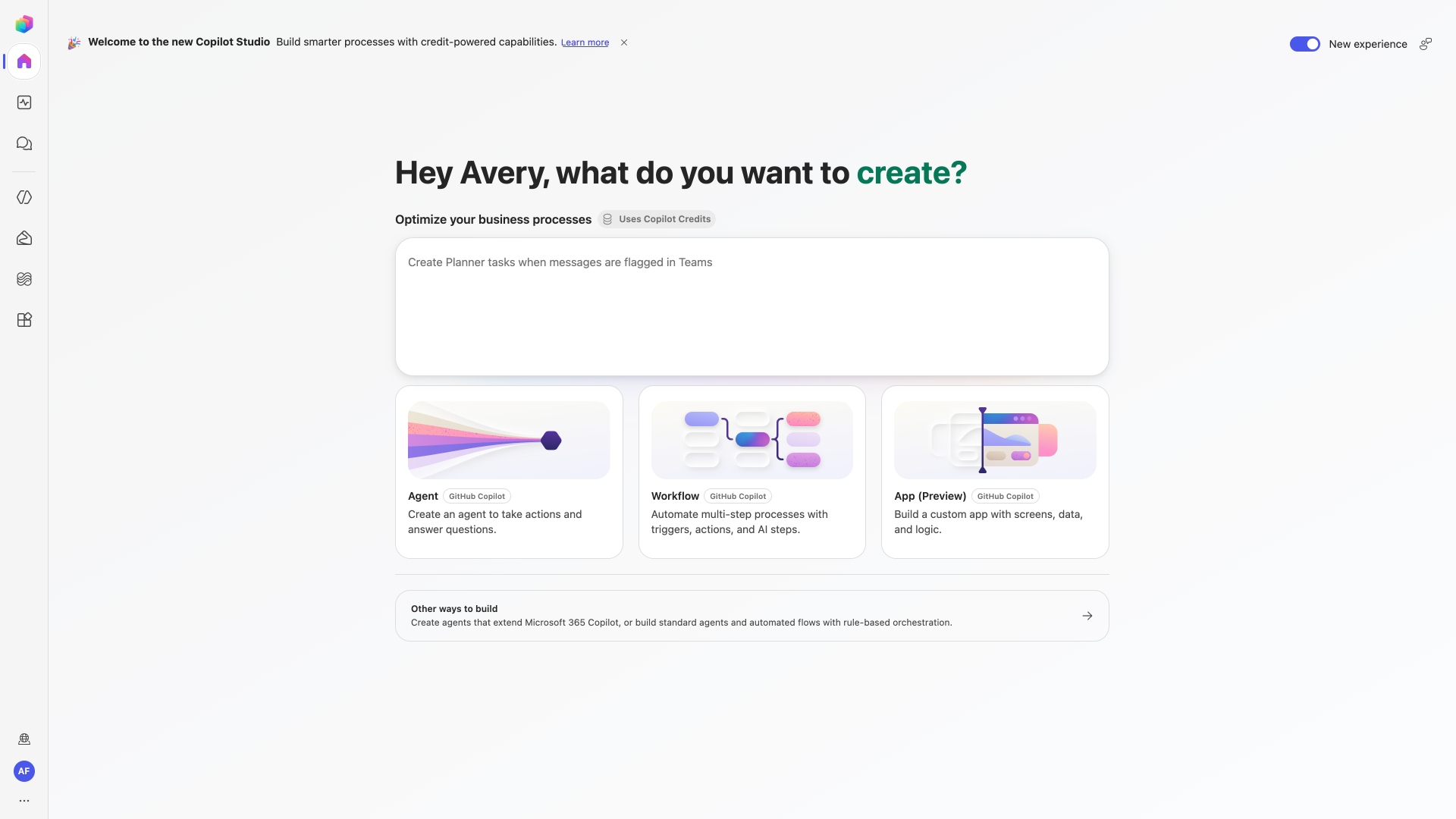
The latest Visual Studio July 2026 updates are here, headlined by a new Agent (Preview) that leverages the GitHub Copilot SDK. Alongside this addition, Microsoft continues to enhance the developer experience with AI features focused on productivity and reliability.

Here are the highlights you shouldn't miss:

  • Meet the New Agent (Preview)

    The new Agent (Preview) delivers more accurate results with fewer prompts, helping you complete coding tasks faster. It also provides a more consistent GitHub Copilot experience across Visual Studio, VS Code, the CLI, and GitHub.

  • Unlock Built-in .NET & Azure Skills

    Visual Studio now includes built-in .NET and Azure skills created by Microsoft experts to enhance your AI-assisted workflows. Enable only the skills you need, giving you greater control over how your coding agent works.

  • Standardise AI Responses Across Your Team

    GitHub organisations can now define organisation-level custom instructions so Copilot responds consistently for every developer. These shared preferences apply automatically within organisation repositories and can be disabled whenever needed.

  • Chat with Branches Before You Switch

    You can now attach Git branches directly to Copilot Chat without checking them out first. Quickly summarise a branch or understand its purpose before deciding whether to work on it.

  • Smarter MSVC Build Tool Discovery

    Visual Studio can now automatically locate the correct MSVC Build Tools across multiple installations when using pinned compiler versions. This helps maintain consistent builds across development teams while reducing manual configuration.

Transform your Dynamics 365 and Power Apps with AI that delivers real business results. Explore Infinity AI Agents and get in touch with us today!

New Power Pages Security Agent Helps Strengthen Site Security

Microsoft is expanding AI capabilities in Power Pages with the introduction of the Security Agent (Preview). The new assistant is designed to help makers identify security risks, configure protections, and streamline security management directly within Power Pages Design Studio.

Here's what you need to know:

  • Get AI-powered security guidance

    The Security Agent understands your site's current security configuration and provides recommendations tailored to your environment. It explains potential issues and can help apply approved configuration changes through a simple conversation.

  • Assess your site's security

    Ask the agent to review your site's security posture, and it will analyse authentication, authorisation, vulnerability scans and configuration settings. It also identifies risks such as excessive permissions, anonymous data exposure and missing security protections.

  • Manage access with confidence

    Create and update table permissions, web roles and page permissions using natural language. The agent recommends least-privilege access and validates your configuration before helping apply changes.

  • Simplify authentication setup

    Configure providers including Microsoft Entra ID, Entra External ID, Azure AD B2C, OpenID Connect and SAML 2.0 with AI assistance. The agent can also troubleshoot sign-in issues and recommend configuration updates.

  • Strengthen your site's protection

    Review and configure Content Security Policy (CSP), HTTP security headers, CORS, cookie settings and other application-level security features. The agent helps ensure your site is aligned with security best practices.

  • Start using Security Agent

    Open your site in Power Pages Design Studio, navigate to the Security workspace and launch the Security Agent. Start with a prompt such as "Review my site's security" to receive personalised recommendations.

Discover how we transformed Human Resources New Zealand (HRNZ)'s membership management with Power Pages. Get in touch today to see how we can do the same for your organisation.

SkiaSharp 4.0 Reaches Stable Release for .NET Developers

SkiaSharp 4.148.0 is now officially available as the first stable release of SkiaSharp v4, marking a significant milestone for .NET graphics development. The update delivers a faster rendering engine and new capabilities while providing a stable upgrade path for developers ready to move to the latest version.

Here's what you need to know:

  • What is SkiaSharp?

    SkiaSharp has powered cross-platform 2D graphics in .NET for more than a decade using Google's open-source Skia engine. It sits behind technologies like .NET MAUI, WinUI 3, and Uno Platform, delivering high-quality rendering across desktop, mobile, web, and server applications.

  • What's new in SkiaSharp 4.148.0?

    The latest release updates the underlying Skia engine with years of rendering, performance, codec, and security improvements—all without requiring code changes. It also introduces support for variable fonts, color font palettes, animated WebP encoding, cleaner APIs, and improved memory management for greater stability.

  • Faster where it matters

    SkiaSharp 4.148.0 delivers up to 24% faster GPU rendering for UI elements like shadows, layered surfaces, and elevated cards compared to the previous stable release. Existing workloads such as charts, text, and vector graphics remain just as efficient, while CPU-based Perlin-noise shaders are now around 6x faster.

  • Smarter development behind the scenes

    Maintaining SkiaSharp now involves agentic workflows that automate tasks such as syncing Skia updates, auditing security vulnerabilities, generating API diffs, and keeping documentation up to date. This allows maintainers to spend more time improving API design, correctness, and overall developer experience.

  • Rewatch the SkiaSharp live event

    Missed the launch? Rewatch the joint .NET and Uno Platform event to learn about SkiaSharp 4.148.0, its new co-maintenance model, and what's next on the roadmap—including Graphite.

Support your remote workforce with custom business applications built for flexibility and productivity. Contact us today to get started!

Visual Studio Introduces Built-in Agent Skills for .NET and Azure Developers

Microsoft has introduced built-in Agent Skills in Visual Studio, giving developers ready-to-use AI capabilities created by the .NET and Azure engineering teams. Available starting with Visual Studio 18.8, these skills are designed to help developers customize agentic workflows and complete common development tasks more efficiently.

Here's what you need to know:

  • Where to find these skills?

    You can access Agent Skills from the Built-in category in the Visual Studio tool picker. They appear automatically when the required .NET or Azure development workloads are installed, and you can view each skill's description or open its folder directly.

  • .NET Skill #1: Build better APIs

    The dotnet-webapi skill helps agents create and modify ASP.NET Core HTTP APIs using proper HTTP semantics, OpenAPI metadata, and error handling. This means cleaner, production-ready code with less manual refinement from your first prompt.

  • .NET Skill #2: Improve application performance

    The analyzing-dotnet-performance skill reviews your .NET code for dozens of common performance issues across memory, async, LINQ, collections, serialisation, and more. It prioritises the biggest optimisation opportunities so you know where to focus first.

  • Azure Skill #1: Deploy from local to cloud

    The Azure deployment skills automate the journey from local development to Azure by preparing infrastructure, validating configurations, and deploying your application. They also include built-in error recovery to reduce deployment friction and simplify cloud delivery.

  • Azure Skill #2: Investigate logs with Kusto

    The azure-Kusto skill lets you analyse Azure Data Explorer logs and telemetry using natural language prompts. It generates and runs KQL queries for you, helping you quickly uncover trends, errors, and performance insights.

Take your CRM further with custom business applications built for the way your team works. Contact us today to discover what's possible.

Dynamics 365 Sales Expands Agentic AI with MCP

Microsoft has announced the extension of Dynamics 365 Sales through the Model Context Protocol (MCP), enabling AI agents to securely connect with external tools, data, and business systems. The update aims to help organisations deliver richer, real-time sales intelligence without relying on complex integrations or duplicated data, further advancing Microsoft's vision for agentic CRM.

Here's what you need to know:

  • Why use MCP?

    Your most valuable sales insights often live outside your CRM, from buying signals to market intelligence and conversation data. MCP brings those insights together so your teams can make faster, more informed decisions.

  • What is Model Context Protocol (MCP)?

    Model Context Protocol (MCP) is an open standard that enables AI agents to securely connect with external applications, systems, and data sources. It helps organisations extend Dynamics 365 Sales with trusted business intelligence while reducing the need for complex integrations or duplicated data.

  • What does this mean for Dynamics 365 Sales users?

    Dynamics 365 Sales agents can securely access real-time information from connected business systems without additional integration work. This gives sellers a more complete view of customers, helping them focus on selling instead of searching for information.

  • How do AI sales agents benefit?

    Microsoft's Sales Qualification Agent and Sales Opportunity Agent can natively use MCP tools through Microsoft Copilot Studio. This allows businesses to leverage existing partners, licences, and trusted data to deliver smarter AI experiences and more connected sales workflows.

  • Meet the new MCP partners

    Microsoft has announced new MCP partners including ZoomInfo, Dun & Bradstreet, LeadIQ, Draup, Gong, Enlyft, and HG Insights. These integrations bring richer market intelligence directly into Dynamics 365 Sales to help sales teams qualify leads, prioritise opportunities, and close deals faster.

Take your CRM to the next level with AI. Discover Infinity AI Agents and contact us today to see how they can streamline your sales and business processes.

Dynamics 365 Customer Insights Becomes the Intelligence Layer for AI-Powered Customer Experiences

Microsoft has announced a reimagined Dynamics 365 Customer Insights, positioning it as the intelligence layer that powers AI-driven, agentic customer experiences across sales, service, and marketing. The update focuses on unifying customer data and signals to help AI agents and business teams deliver more connected, personalised interactions throughout the customer journey.

Here's what you need to know:

  • The challenge

    Your organisation is collecting more customer data than ever, but when that information lives in different systems, it's difficult to see the full picture. Without connected data, teams miss opportunities, and AI can't deliver the insights and recommendations it's capable of.

  • The solution

    Dynamics 365 Customer Insights brings customer data together into a single, continuously updated profile while turning those insights into personalised customer journeys. That means every team can make better decisions and engage customers with the right message at the right time.

  • Put AI to work for customer engagement

    New AI capabilities like the Journey Creation Agent, Outreach Optimization Agent, and Customer Insights MCP Server help automate campaign creation, optimise outreach, and ensure AI respects customer consent. Your team spends less time on manual work and more time creating meaningful customer experiences.

  • A connected customer experience

    Customer Insights works seamlessly with Dynamics 365 Sales and Customer Service, so every team has access to the same customer intelligence. Instead of disconnected interactions, you can deliver a consistent experience from the first touchpoint through to ongoing support.

  • Turn insights into action

    Customers expect personalised experiences, and organisations that can act on customer data quickly have a clear advantage. By bringing together Customer Insights, Sales, and Customer Service, Dynamics 365 helps your teams build stronger relationships, work more efficiently, and deliver better business outcomes.

Discover how Dynamics 365 Customer Insights helped HRNZ transform its membership management and deliver a more connected member experience. Contact us today to learn how we can help your organisation achieve similar results.

Microsoft Opens Private Marketplace Preview for Visual Studio Administrators

Microsoft has announced a preview of Private Marketplace for Visual Studio, giving organisations a new way to manage how developers discover and install extensions. The preview is designed for Visual Studio administrators, security teams, and enterprise stakeholders seeking stronger governance, compliance, and control over development environments.

Here's what you need to know:

  • What is Private Marketplace for Visual Studio?

    Private Marketplace gives organisations a centralised way to manage which extensions developers can access while maintaining the familiar Visual Studio experience. It also allows teams to host private extensions, enforce marketplace policies, and improve governance across development environments.

  • Join the Preview

    Visual Studio administrators, security teams, and enterprise stakeholders can now sign up to evaluate the preview and help shape the feature with their feedback. It's an opportunity to explore how Private Marketplace can support stronger security and extension management in your organisation.

Build custom business applications that help your organisation improve compliance and streamline business processes. Contact us today to get started!

Service Agent Comes to Microsoft 365 Copilot for Dynamics 365 Customer Service

Microsoft is bringing Service Agent directly into Microsoft 365 Copilot, giving customer service teams a new way to access customer context and complete service tasks without leaving their everyday workspace. The integration aims to streamline workflows by combining the power of Dynamics 365 Customer Service with the familiar Microsoft 365 Copilot experience.

Here's what you need to know:

  • What is Service Agent?

    Service Agent builds on the capabilities of Copilot by not only answering questions and summarising information, but also taking action across the customer service lifecycle. With more than 90 MCP tools and MCP apps, it helps service teams understand customer issues, manage cases, access knowledge, draft emails, recommend next best actions, work with files, improve service quality, and much more—all without leaving the conversation.

  • Copilot vs Service Agent at a glance

    While Copilot primarily assists with answering questions and generating summaries, Service Agent can also reason, automate tasks, and perform actions across workflows. It works across Dynamics 365 Customer Service, Microsoft Teams, Outlook, and Microsoft 365 Copilot, using Dataverse and Microsoft Graph through Work IQ. Organisations can also extend its capabilities using Microsoft Copilot Studio, custom MCP tools, and widget customisation.

  • How does this benefit customer service teams?

    Service Agent helps customer service teams resolve cases faster by reducing app switching and automating actions across the entire workflow. It also improves productivity, accelerates onboarding, and delivers more consistent customer experiences.

  • What's coming next?

    Microsoft is continuing to expand Service Agent with deeper application context, more proactive AI experiences, stronger governance and guardrails, mobile support in Microsoft 365 Copilot, and additional MCP tools.

  • Getting started

    Service Agent requires a Dynamics 365 Customer Service Enterprise or Premium licence to access case data, knowledge, and service workflows. For the full integrated experience across Microsoft 365, organisations also need a Microsoft 365 Copilot licence, while premium AI capabilities consume Copilot Credits. Administrators can provision Service Agent through the Microsoft 365 admin centre and safely roll it out using role-, app-, and queue-based controls.

Want to add another AI that will boost your productivity in Dynamics 365 and Power Apps? Explore Infinity AI Agents and contact us today!