
Microsoft is positioning semantic layers in Power BI as a critical foundation for enterprise AI, enabling more consistent, trustworthy, and scalable insights. By standardizing business logic and data definitions, these layers help AI systems deliver accurate answers across tools and users. The move reinforces how modern analytics platforms are evolving to support AI-driven decision-making at scale.
Here’s what’s new:
Translytical flows
Power BI is no longer just for reporting. Users can now take action directly within reports—update records, trigger workflows, and resolve issues in real time without switching systems.
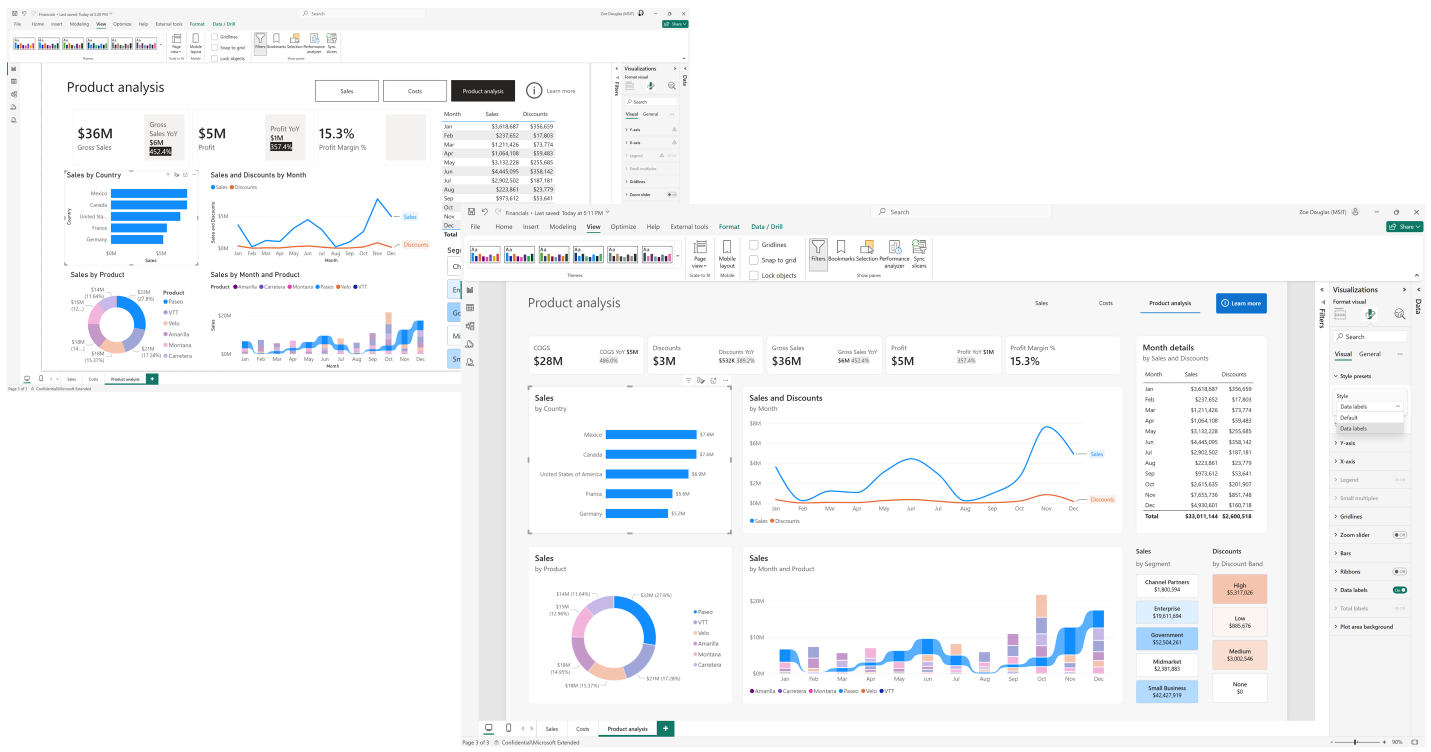
Modern visual defaults
Create polished, consistent reports instantly. With Fluent 2-aligned themes, your visuals look professional right out of the box—so you can focus on insights, not formatting.
Report Copilot for Mobile
On the go? Ask questions via voice or text in the mobile app and get instant answers or visuals powered by Copilot.
TMDL View in the Web (Preview)
A code-first modeling experience is coming to the browser. View, edit, and manage semantic models with greater transparency and efficiency using TMDL.
Direct Lake on OneLake
Work with open formats like Delta Lake and Parquet while reducing data duplication. Direct Lake unlocks faster performance and near real-time insights.
Direct Lake calculated columns (Preview)
Extend your data model when upstream changes aren’t possible by adding calculated columns directly within Direct Lake tables.
Read how Power BI empowers the Independent Police Conduct Authority to see their data at a higher level in our case study. Got questions? Contact us today!