Power BI Introduces Outbound Access Protection for Semantic Models

Microsoft is expanding security controls in Power BI with the preview release of Outbound Access Protection (OAP) for semantic models. The update gives organizations more control over outbound connections by allowing only trusted destinations for workspace traffic. This marks another step toward stronger governance and protection for sensitive data environments in Microsoft Fabric.
Here’s what you need to know:

  • What is OAP?Outbound Access Protection (OAP) is a workspace-level network security feature that blocks outbound traffic by default and only allows connections to trusted destinations you explicitly approve.

  • How does outbound data move from semantic models?

    Semantic models can connect across workspaces and access cloud or on-premises data sources, including destinations outside your organisation’s data boundary. Composite models can also transfer data between sources when using DirectQuery mode.

  • How does OAP work?

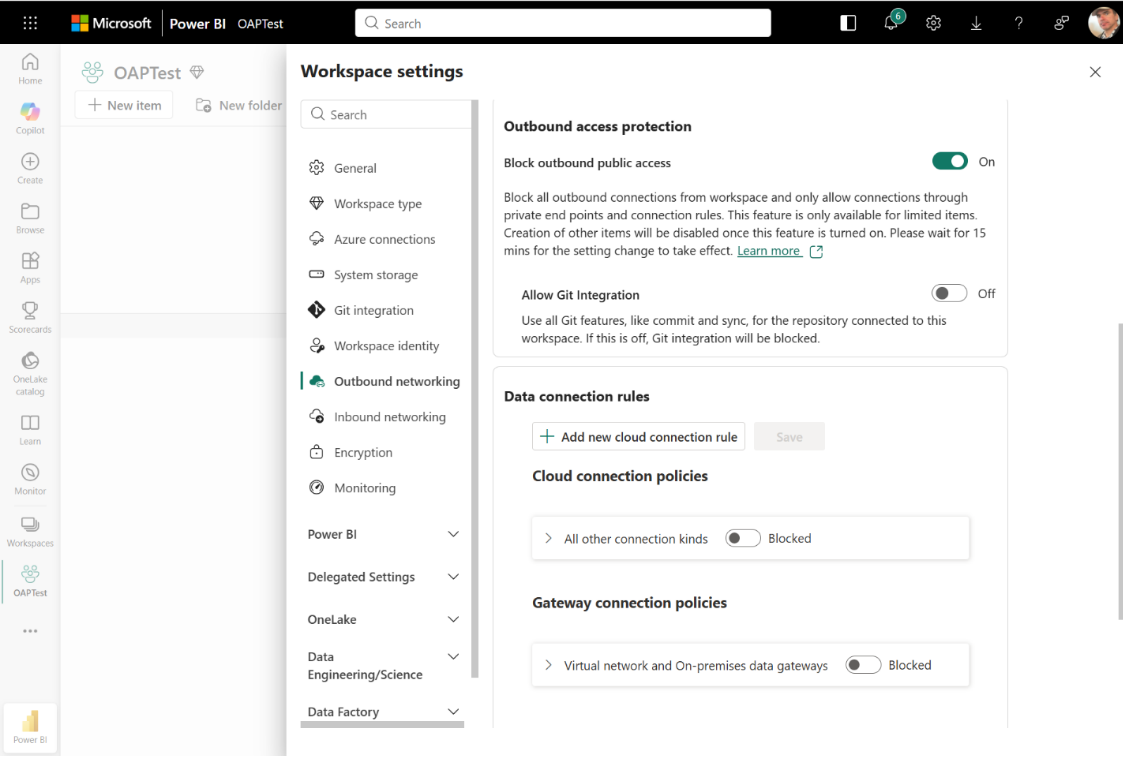
    OAP is managed through a single workspace setting. By enabling “Block outbound public access” under Network security, all outbound connections are denied unless an exception is configured.

  • Getting started with OAP:

    Confirm your workspace is using an F SKU, enable the required tenant setting, and ensure the workspace only contains OAP-supported items before turning on “Block outbound public access” under Network security. After adding exceptions for approved destinations, allow time for the policy to propagate and validate connections to confirm everything is working correctly.

See how Power BI helped the Independent Police Conduct Authority unify their data and streamline investigations with greater efficiency and visibility. Read our case study and contact us today to discover how data-driven insights can support your organisation.
Dynamics 365 Customer Service Introduces Data Sensitivity Labels for Customer Emails

Microsoft is introducing Data Sensitivity Labels for Emails in Dynamics 365 Customer Service, helping organisations better protect sensitive customer communications. Powered by Microsoft Purview, the capability brings classification, encryption, and compliance controls directly into customer service workflows. The update aims to help service teams maintain both security and productivity when handling confidential customer information.

Here’s what you need to know:

  • How does sensitive information get exposed?

    A single forwarded email, broad recipient list, or accidental share can expose confidential customer information in seconds.

  • What are Data Sensitivity Labels?

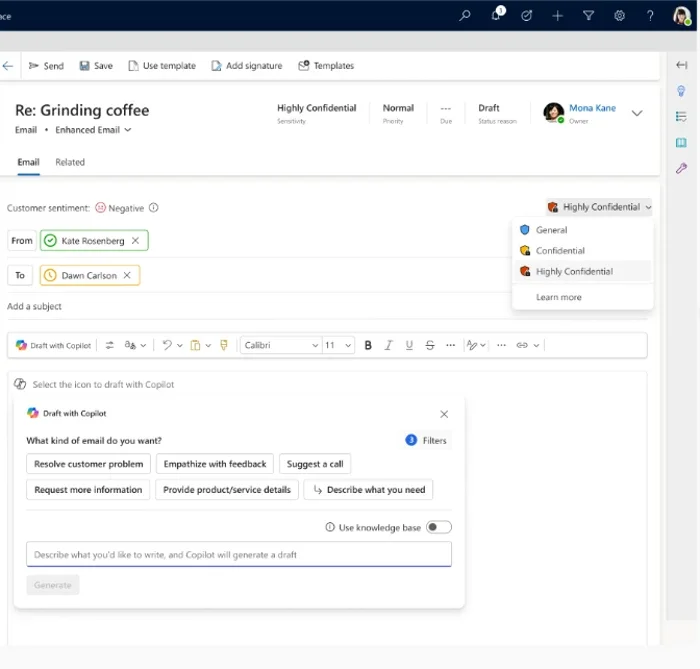
    Powered by Microsoft Purview, Data Sensitivity Labels classify outbound customer emails based on the sensitivity of their content and automatically apply the appropriate protection before sending. Using familiar labels such as Public, Confidential, and Highly Confidential, organisations can ensure every email aligns with existing security and compliance policies.

  • How does it work?

    As service representatives draft customer emails, Dynamics 365 surfaces Microsoft Purview sensitivity labels directly within the workflow, making it easy to classify and protect sensitive information before sending. Once applied, the labels automatically enforce security policies such as restricting external forwarding and unauthorised access while keeping the experience seamless for both agents and customers.

  • Key capabilities

    The feature includes Purview-backed sensitivity labels, in-context classification guidance, and automated protection aligned with existing compliance policies. It helps organisations maintain consistent security, governance, and enterprise-grade compliance across customer communications.

Build stronger customer relationships with the right system in place. Explore Customer Relationship Management solutions and contact us today to see how your organisation can deliver more connected customer experiences.

Plan Before You Build with the New Plan Agent in Visual Studio

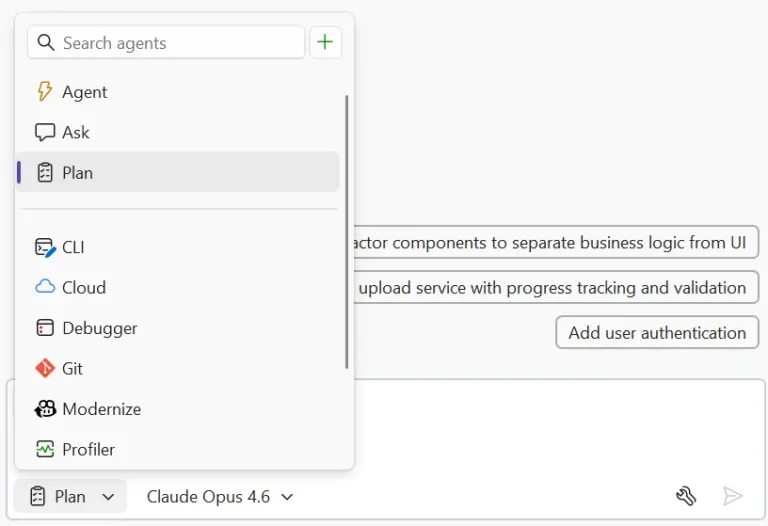
Microsoft is introducing the Plan Agent in Visual Studio, a new AI-powered capability designed to help developers map out implementation plans before writing code. The feature enables developers to collaborate with AI by asking clarifying questions, refining requirements, and reviewing structured plans before execution begins. With planning-first workflows becoming more important in AI-assisted development, the Plan Agent aims to make coding more transparent, organized, and predictable.

Here’s how it works:

  1. Start with your idea

    Choose the Plan Agent in Copilot Chat and describe what you want to build. Whether it’s “add authentication to this app” or “refactor the payment module for multiple providers,” the more context you provide, the better the plan becomes.

  2. Explore and clarify

    Copilot scans your codebase using read-only tools and asks clarifying questions when needed, helping it better understand your goals before drafting a plan.

  3. Define and refine

    A detailed implementation plan is generated for review. You can ask Copilot to rethink approaches, consider edge cases, break tasks into smaller steps, or adjust impacted files.

  4. Edit collaboratively

    Plans are saved as markdown files inside .copilot/plans/plan-{title}.md, making them easy to edit, review with your team, and continuously refine.

  5. Implement when ready

    Once you’re satisfied, select “Implement plan” to hand it over to Agent mode. No code changes happen until you approve them, giving you full visibility and control throughout the process.

Transform the way you work with AI in Dynamics 365 and Power Apps. Explore Infinity AI Agents and contact us today to see how AI can support your business operations.

New Power Query Experience Arrives in Power BI Desktop (Preview)

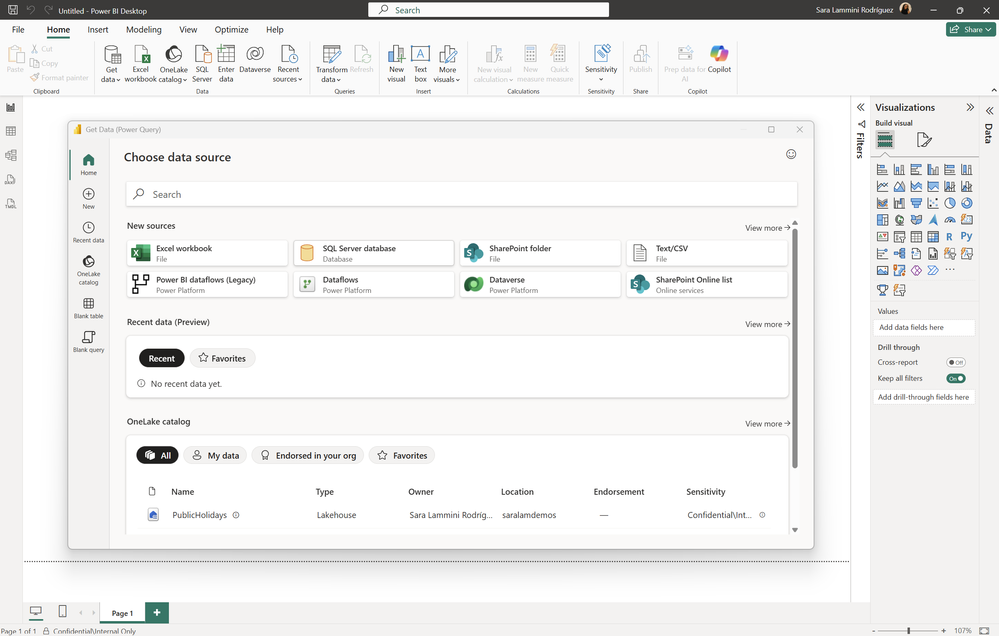
Microsoft has introduced a preview of a redesigned Power Query Get Data experience in Power BI Desktop, aimed at modernising how users discover and connect to data sources. The update focuses on a more streamlined connection flow alongside improved accessibility features, including better navigation support and usability enhancements. This marks another step toward unifying the data preparation experience across Microsoft’s data ecosystem.

Here’s what you need to know:

  • Why was this feature introduced?

    As the number of connectors and data sources in Power BI continues to grow, finding and connecting to the right data can become more complex. Microsoft redesigned the Get Data experience to make data discovery faster, simplify connection flows, and create a more accessible and user-friendly experience.

  • What’s new?

    The new Get Data experience introduces a modernised interface designed to help users discover, connect, and transform data with less friction. A streamlined navigation pane now makes it easier to quickly access recent data, OneLake Catalog, blank queries, and other commonly used options.

  • A simpler and more connected data experience

    Connecting to data is now more cohesive, reducing the need to jump between multiple dialogs. Settings, authentication, and connection configurations are now managed in a more unified flow, helping users move faster from selecting a source to shaping and analyzing data.

  • Designed for accessibility and usability

    The redesigned experience includes full keyboard navigation support to make workflows more efficient and accessible without relying heavily on a mouse. It also supports dark mode, creating a more comfortable viewing experience across different environments.

  • What’s the impact for users?

    The new experience helps users spend less time searching for data sources and move faster into analysis and modeling. Whether you’re a beginner or an experienced professional, it creates a smoother and more efficient workflow in Power BI.

  • Get started

    Open Power BI Desktop and navigate to File > Options and settings > Options > Preview features to enable the “New Power Query experience” option. Restart Power BI Desktop, select Get Data, and start exploring the redesigned experience.

Discover what Power BI can do for your organisation. Unlock deeper insights with Business Intelligenceget in touch with us today.

Dynamics 365 Introduces AI Credit Estimation for Service Operations

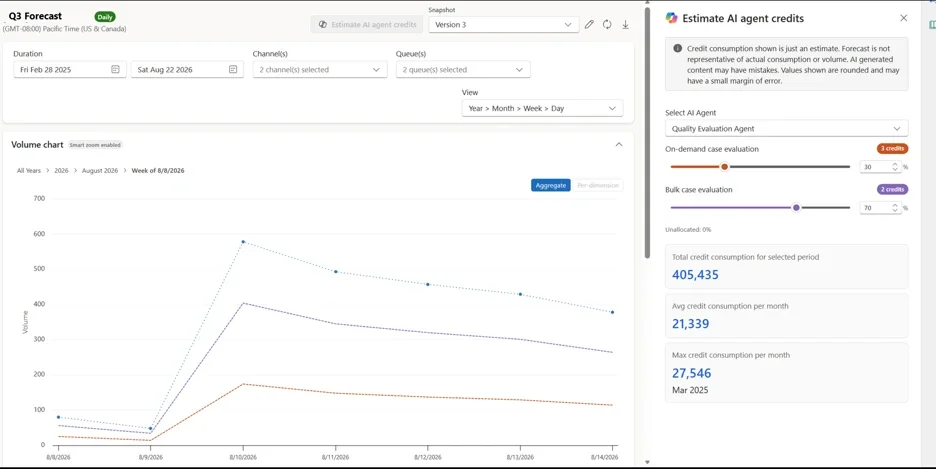
As AI agents take on a larger role in customer service operations, Microsoft is introducing AI Credit Estimation in Dynamics 365 Customer Service and Contact Center. The new capability helps organizations translate forecasted service demand into projected AI usage and credit consumption, giving teams greater visibility into operational and financial planning. With AI becoming part of the workforce itself, Dynamics 365 is evolving workforce management to include both human and AI-driven capacity planning.

Here’s how AI Credit Estimation in Dynamics 365 Customer Service and Contact Center can help organisations plan smarter:

  • What’s creating the planning gap?

    Traditional workforce planning models were built around people, not AI agents. While organisations can forecast case volumes and service demand, many still struggle to translate that into expected AI usage and cost.

  • Why use AI Credit Estimation?

    AI Credit Estimation provides a transparent way to map forecasted workloads to projected AI credit consumption. It brings AI usage into the planning process alongside staffing ratios, service levels, and case forecasts — helping teams move from assumptions to measurable operational insights.

  • Step 1: Create a Forecast Scenario

    Build a forecast scenario in Dynamics 365 Customer Service or Contact Center by defining your planning horizon, queues, and communication channels. Using historical trends, seasonality, and traffic patterns, the platform generates a data-driven prediction of future demand.

  • Step 2: Select AI Agents

    Open the AI Credit Estimator and choose the agents you want to model. Supported out-of-the-box agents include: Quality Evaluation Agent, Case Management Agent, and Customer Intent Agent.

  • Step 3: Review AI Credit Estimates

    The estimator maps forecasted workloads to projected AI credit usage, giving teams a clear view of both expected service demand and the AI capacity required to support it. This enables organizations to validate assumptions, refine planning scenarios, and make more informed operational decisions before scaling AI initiatives.

Want AI that can streamline work across Dynamics 365 and Power Apps? Explore Infinity AI Agents and contact us today to see how AI can support your organisation.
Dynamics 365 Customer Service Brings Emotional Intelligence to Customer Emails

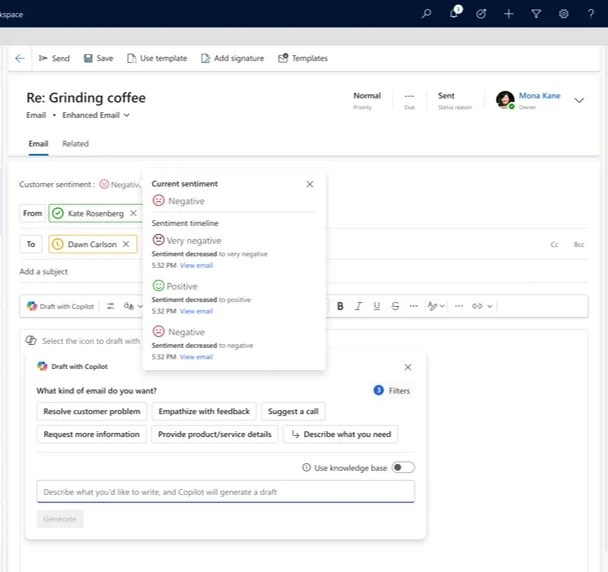
Microsoft is introducing Email Sentiment in Dynamics 365 Customer Service, an AI-powered capability that helps service teams recognize emotional tone directly within customer emails. By surfacing sentiment insights early, organizations can respond with greater empathy, prioritize higher-risk conversations, and improve customer experiences at scale.

Here’s what you need to know:

  • What is Email Sentiment?

    Email Sentiment automatically analyses incoming customer emails and classifies their tone as Positive, Neutral, or Negative. These insights appear directly within the email and case workspace before a response is drafted, helping service representatives understand not only what customers are saying, but how they feel.

  • Why sentiment awareness matters

    Customers communicate differently across cultures, languages, and experiences, making emotional cues easy to miss in high-volume support environments. Email Sentiment helps organizations identify frustrated customers earlier, respond more empathetically, and reduce escalations through better-informed communication.

  • How it works

    Imagine a customer reaching out after repeated service disruptions. Email Sentiment flags the message as Negative before the representative replies, allowing them to acknowledge frustration upfront, respond with empathy, and focus immediately on resolution.

  • Key capabilities

    Email Sentiment includes automatic sentiment detection, in-context emotional insights, language-aware AI, and actionable emotional signals directly within the workflow. It also supports sentiment timelines and case sentiment tracking to help teams better understand customer interactions over time.

  • Designed for customer-focused organisations

    Email Sentiment in Dynamics 365 Customer Service complements Email Assist and case management by bringing emotional intelligence directly into everyday support interactions — helping empathy become part of the workflow, not just an individual skill.

Want deeper insight into how your customers feel across Dynamics 365 and Power Apps? Discover how Infinity AI Agents can help you understand customer sentiment, improve engagement, and deliver more personalised experiences. Contact us today to learn more!

Microsoft Introduces Copilot Cowork for Action-Driven AI Workflows

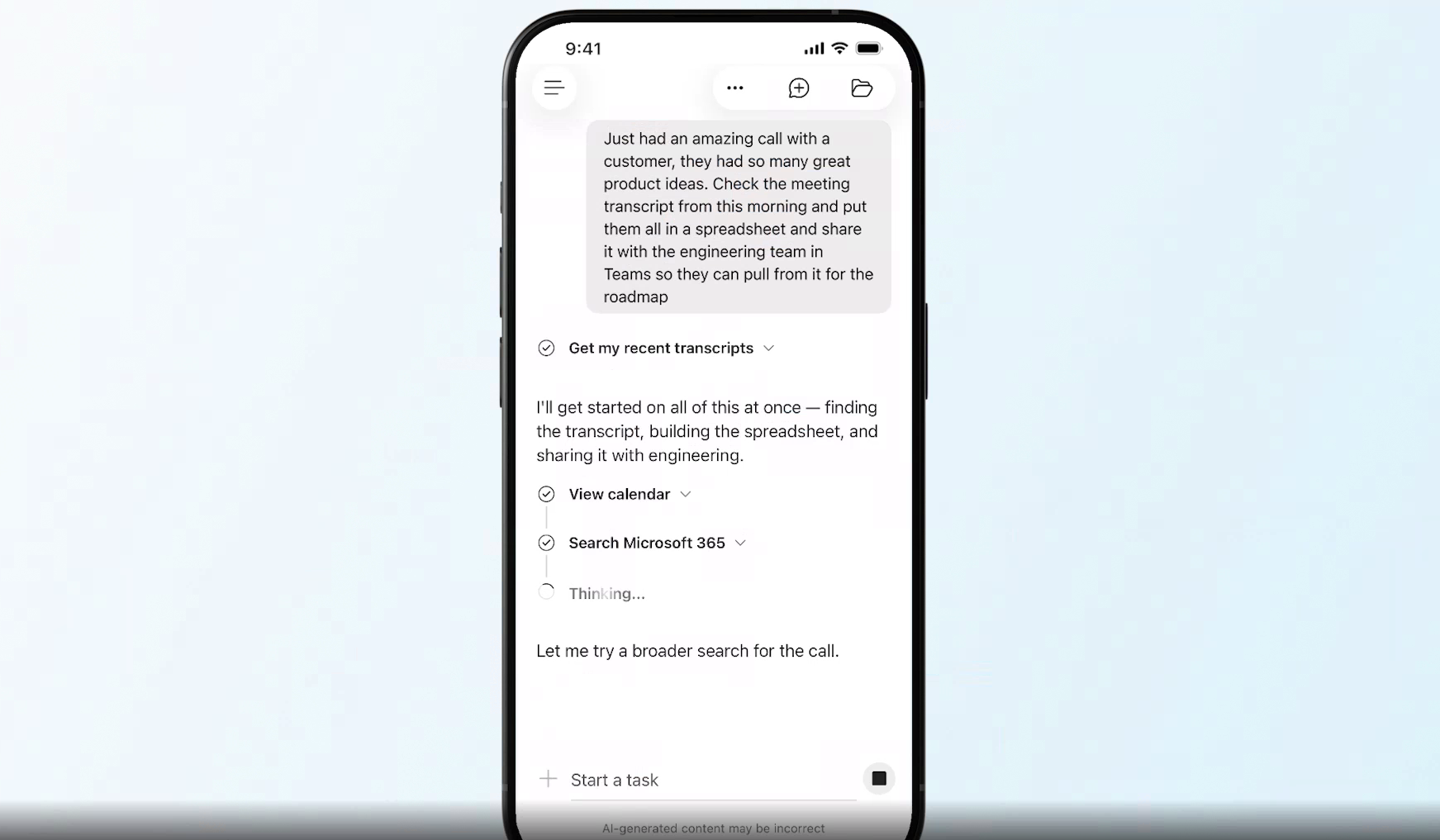
Microsoft is taking AI beyond conversations with the introduction of Copilot Cowork, a new Microsoft 365 experience designed to turn prompts into real actions across apps, workflows, and devices. The latest update brings built-in skills, integrations, and custom automation capabilities that help users coordinate work, create content, and manage tasks more efficiently. With support across desktop and mobile, Microsoft is positioning Copilot as a more capable digital coworker for everyday business operations.

Here’s what you need to know:

  • What is Copilot Cowork?

    Copilot Cowork is built on Work IQ, Microsoft’s intelligence layer that understands your data, tools, and organisation. This allows Cowork to plan, act, and deliver outcomes based on how your business actually operates — not just information from the public internet.

  • Assign tasks on the go

    Cowork is available on iOS and Android, making it easy to delegate work anytime, anywhere. While you focus on higher-value priorities, Cowork can handle tasks in the background for you.

  • Use it with Cowork Skills

    Many business processes follow repeatable patterns — and that’s where Skills come in. Skills are reusable instruction sets that guide Cowork on how to complete tasks consistently using your preferred structure, tone, and workflow.

  • Connect work with Cowork Plugins

    Copilot Cowork integrates with Microsoft tools like Power BI, Dynamics 365, and ERP systems so it can work across your organisation’s existing platforms. It also supports third-party connectors and custom plugins, helping businesses automate workflows and extend AI capabilities into their unique systems.

Empower your teams with AI that can assist, automate, and accelerate work in Dynamics 365 and Power Apps. Discover Infinity AI Agents and contact us today to transform the way you work.

Power Fx User Defined Types Are Now Generally Available in Power Apps

Microsoft has announced the general availability of User Defined Types (UDTs) in Power Fx for Power Apps, bringing makers more flexibility when building scalable and maintainable applications. The update enables developers to structure records and tables more effectively, helping simplify complex formulas and improve app readability. With UDTs now production-ready, Power Fx continues evolving into a more powerful low-code programming language for enterprise app development.

Here’s what you need to know:

  • Records and Tables as Parameters and Return Values

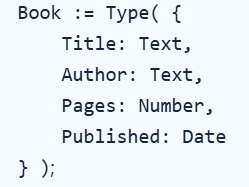
    User Defined Types help make formulas easier to read, write, and maintain by grouping related information into structured data types. This also reduces errors through strong typing, especially when working with JSON data. For example, details like a book title, author, page count, and publication year can all be grouped into a single typed structure using the Type function in the App object’s Formulas property.

  • UDTs and JSON

    Working with JSON becomes more reliable with UDTs by validating and converting untyped text into typed Power Fx objects. Since JSON doesn’t support native date/time types and often stores them as ISO 8601 strings, UDTs help ensure values are correctly interpreted and handled correctly.

  • IsType and AsType

    Need more control when converting values? IsType and AsType let you safely check and convert Dynamic values into strongly typed objects while helping avoid runtime errors.

  • RecordOf

    RecordOf makes it easier to define functions that work with individual records from a table structure, helping you build cleaner, reusable, and scalable formulas.

Empower your teams to work smarter anytime, anywhere with custom business applications built for your organisation’s needs. Discover what’s possible and let’s talk today!

Visual Studio Introduces Agent Skills for Smarter AI Workflows

Microsoft is continuing to evolve AI-assisted development with the introduction of Agent Skills in Visual Studio. The new capability allows developers to create reusable instruction sets that help GitHub Copilot agents handle specific development tasks more consistently and efficiently. With Agent Skills, teams can customize how AI supports their workflows, from automation to code generation and project-specific processes.

Here’s what you need to know:

  • What are Agent Skills?

    Agent Skills are reusable instruction sets that teach Copilot agents how to handle specific tasks, such as running build pipelines, generating boilerplate code, or following your team’s coding standards. Once defined, the agent can automatically apply the right skill whenever it’s relevant.

  • Creating a Skill

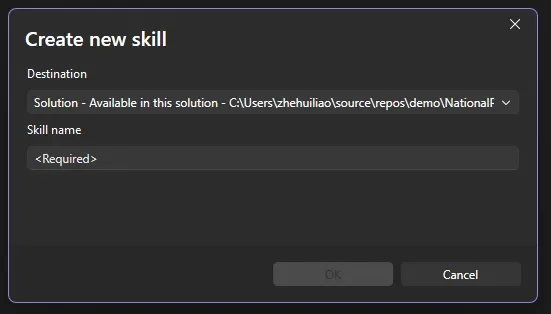
    You can create a skill directly inside Visual Studio. Open the skills panel by clicking the tools icon in the bottom-right corner of Copilot Chat, then select the + button to start the guided setup. Choose whether the skill will be global or solution-level, give it a name, and Visual Studio will generate a SKILL.md template for you to complete. Copilot Agent mode can even help you fill out the template. This experience is currently available in the Insiders channel and is coming to Release soon.

  • Managing Skills

    The skills panel makes it easy to manage your skills in one place, including editing SKILL.md files, searching by keyword, opening skill folders, and viewing diagnostics to quickly identify configuration issues.

  • Skills vs. Custom Instructions

    Custom instructions are best for broad, always-on guidance like coding preferences or formatting rules. Agent Skills, on the other hand, are task-specific and dynamically loaded only when relevant, helping Copilot respond more intelligently based on the situation.

Want AI agents that can support your team’s work in Dynamics 365 and Power Apps? Discover Infinity AI Agents and contact us today!

Microsoft Unveils Latest Power BI Innovations for May 2026

Microsoft has released the May 2026 Feature Summary for Microsoft Power BI, introducing a new wave of updates across Copilot, reporting, modeling, and data connectivity experiences. The latest release focuses on helping users explore data more efficiently, generate insights faster, and create more polished reports. Several enhancements also continue Microsoft’s push toward AI-assisted analytics and streamlined business intelligence workflows.

Here are some of the standout updates:

  • Copilot and AI: Set Perspectives for Explore

    Make large data models easier to navigate by setting an Exploration perspective for reports. This gives report consumers a more focused list of tables and fields when using Explore, improving usability and reducing complexity.

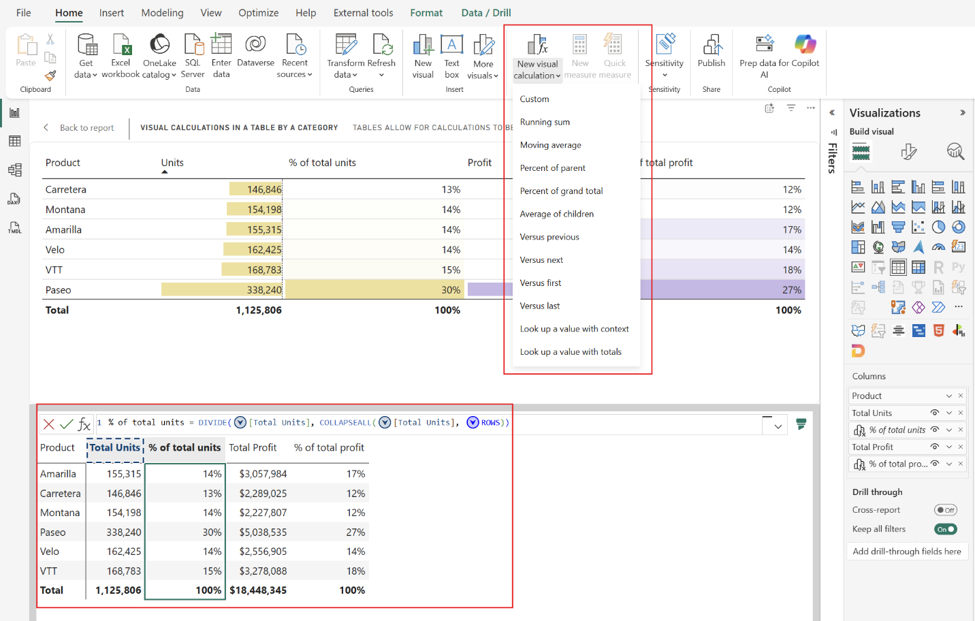
  • Reporting: Visual Calculations and Custom Totals (Generally Available)

    Create running sums, moving averages, percent of parent, and more directly inside visuals — without adding DAX measures to your semantic model. Visual calculations now provide greater flexibility and faster insights right where you need them.

  • Modeling: Faster Access to Web Modeling for Semantic Model Authors

    Power BI is streamlining the semantic model authoring experience by taking users with edit permissions directly into web modeling instead of the model details page, helping reduce extra navigation and speed up iteration.

  • Data Connectivity: New Get Data Experience in Power BI Desktop (Preview)

    The redesigned Power Query Get Data experience introduces a more unified and accessible way to discover and connect to data sources across Microsoft Fabric, Power BI Desktop, and Excel.

  • Visualizations: Card with States

    The popular Card with States visual by OKVIZ is back with a fully modernized experience, updated for the latest Power BI APIs and ready for the future of KPI storytelling.

See the full list of Power BI’s May 2026 updates!

Turn your data into actionable insights that drive smarter business decisions. Discover the power of Business Intelligence and contact us today!